
Oklahoma river · Water recovery
Seven hours searching an Oklahoma river
One carefully documented loss led to an extended search, six recovered rings and an honest outcome: the original ring has not yet been located.
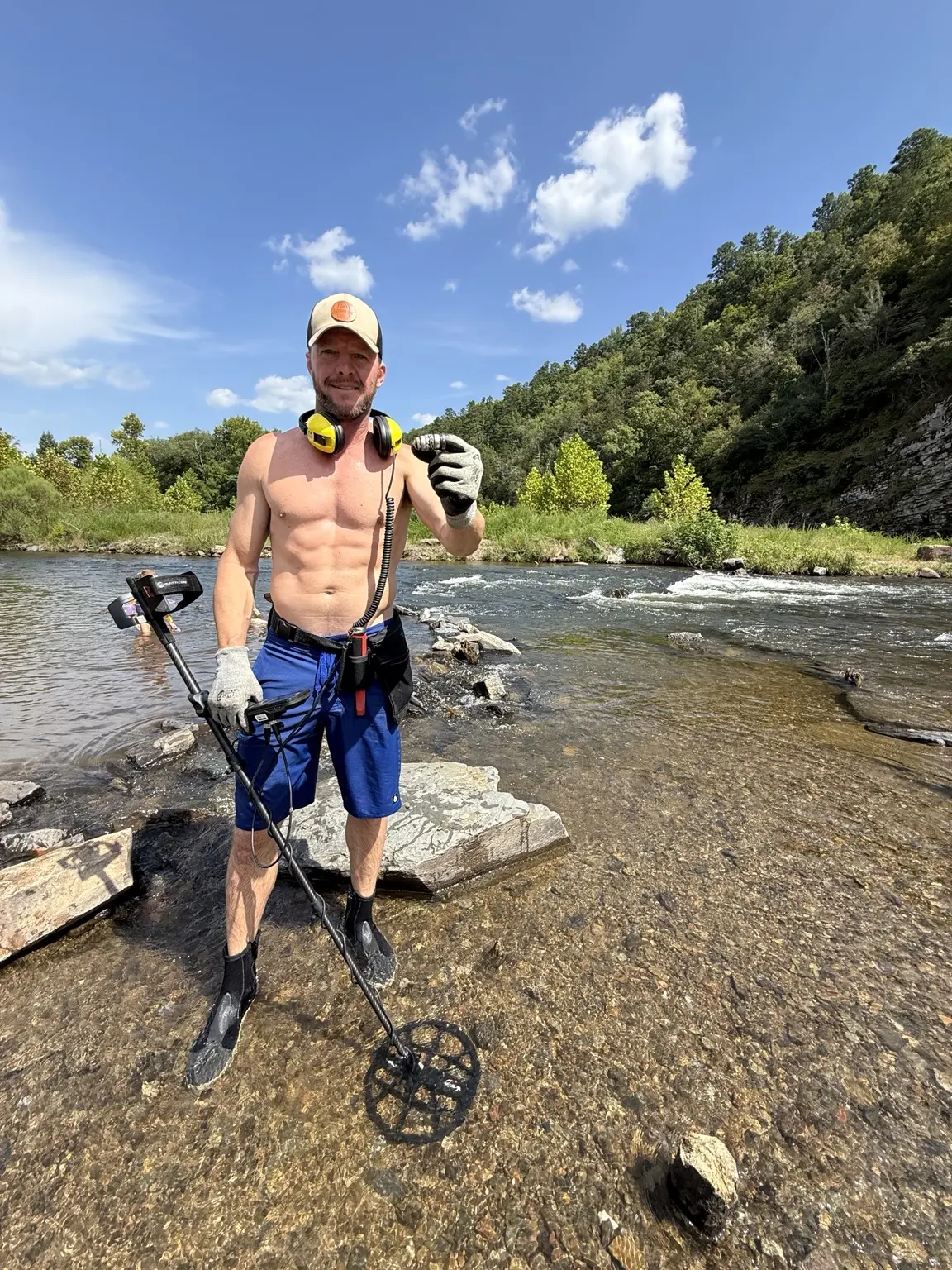
A photograph helped rebuild the search area
A woman contacted us after losing a ring while tubing on an Oklahoma river. She had done something especially valuable: she documented the location well. Photographs and recognizable shoreline features gave the search a much stronger starting point than memory alone.
River conditions change. Current, depth, visibility, entry points and the position of surface landmarks all affect where a search can be conducted safely and where an object may have settled.
One reported loss became two
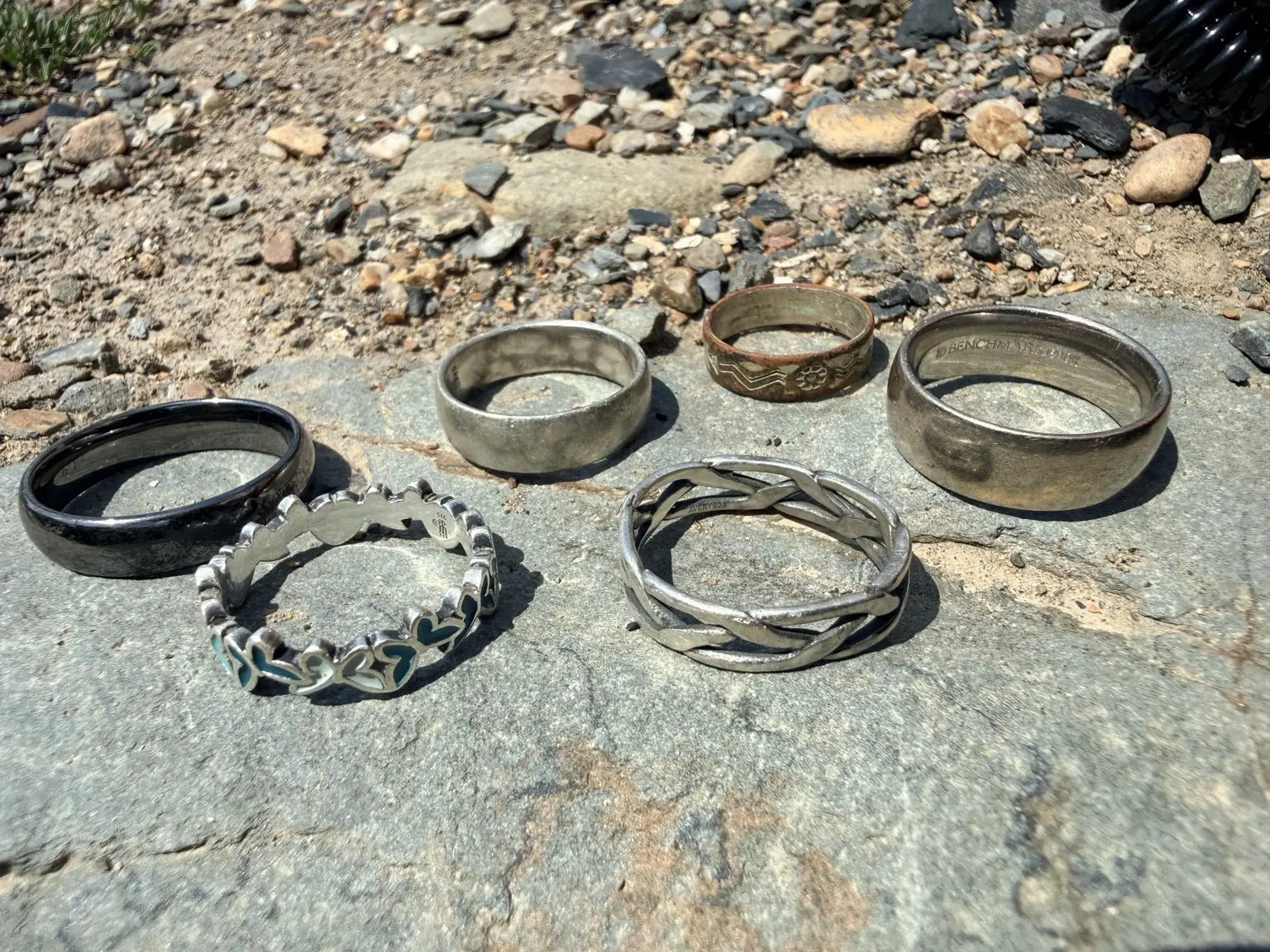
Another person also reported losing a ring in the same general stretch of water. The search expanded, and that second reported ring was recovered. Five additional unclaimed rings were also located during the work.
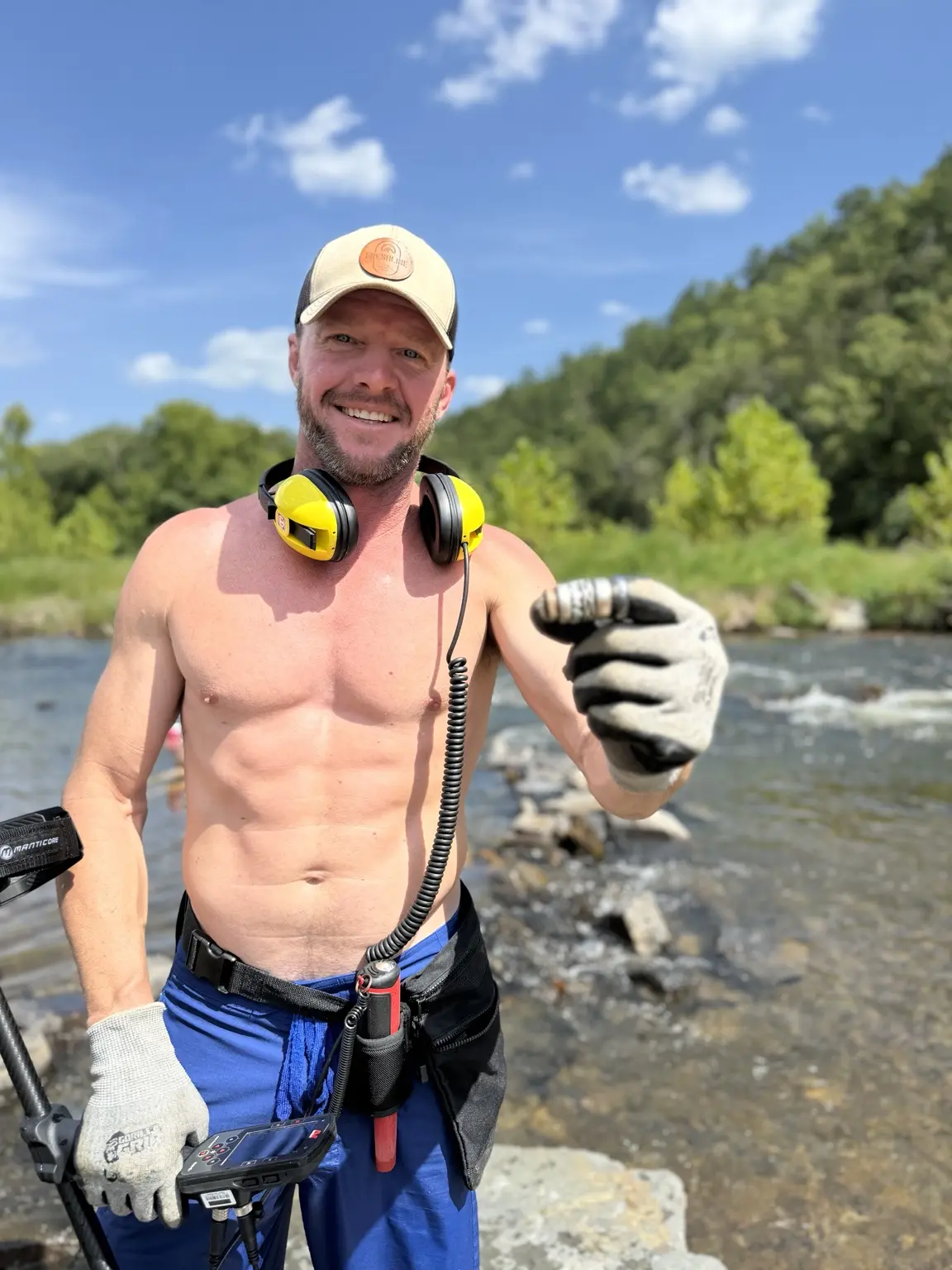
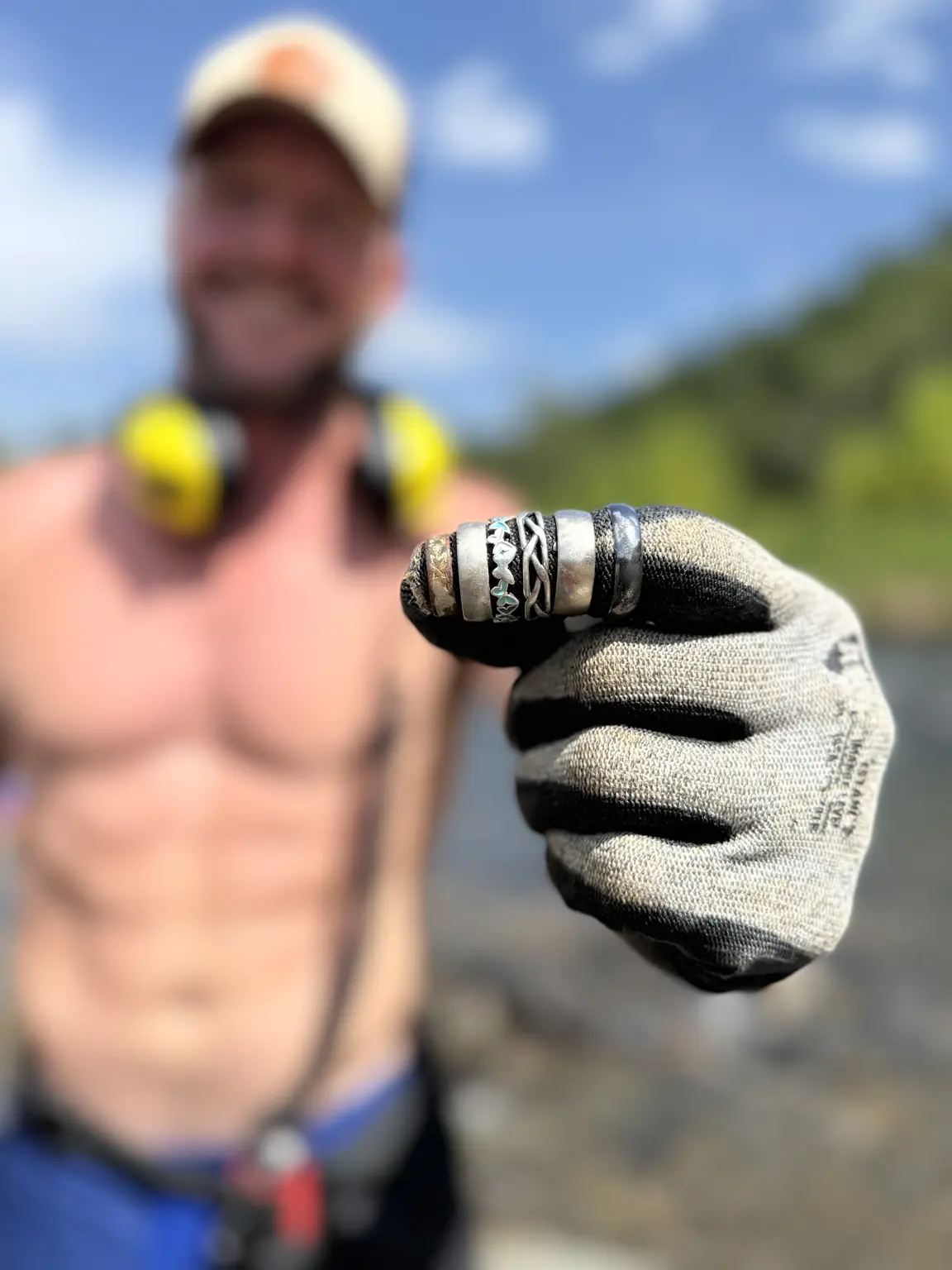
After approximately seven hours in the water, six rings had been recovered—but not the original client’s ring. That search remains open, and we intend to return when conditions and access make another careful attempt practical.
Leave the water better than we found it
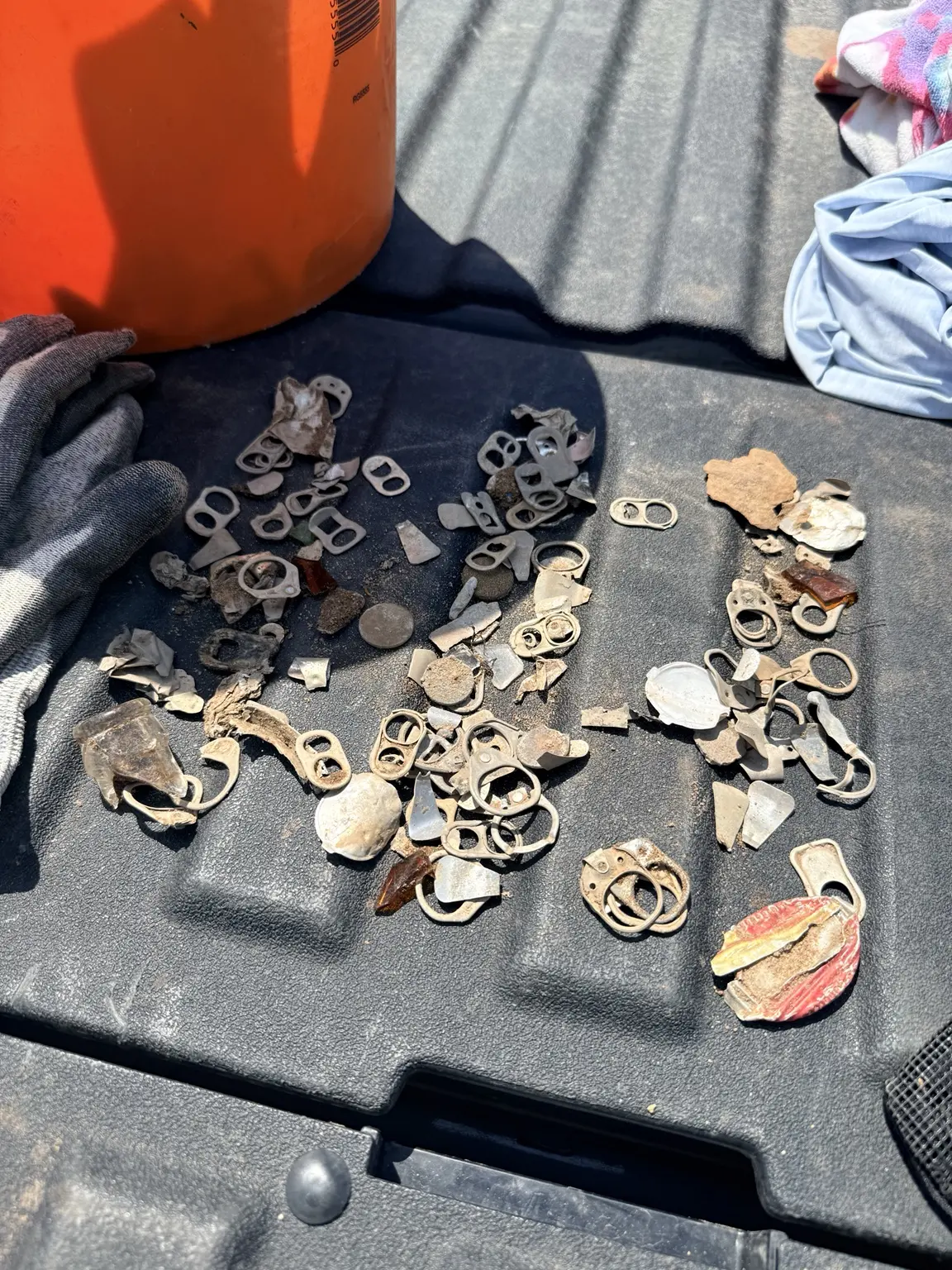
River searches produce plenty of signals that are not the missing item. Pull tabs, sharp metal fragments, crushed cans, lead sinkers, fishing lures and other debris were recovered along the way. The photograph shows only part of what was removed. We take the trash we encounter with us rather than return it to the water, reducing hazards and leaving the search area cleaner than we found it.
Lesson from the search
Document the location immediately—even if the item cannot be searched for that day.
Take wide photographs showing both banks, bends, trees, docks, access points and other fixed landmarks. Save map pins and screenshots. Record where you entered the water, the direction of travel and exactly when the item was last confirmed. Those details may matter more than an approximate description given later.
Water recovery requires both persistence and limits
A certified diver and specialized equipment can expand what is searchable, but every location is evaluated for depth, current, visibility, entanglement hazards, access and other safety concerns. No responsible search should ignore the conditions simply because the item matters.